
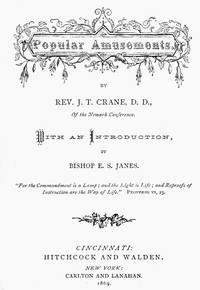
Popular Amusements by J. T. Crane
Published in 1869, Popular Amusements isn't a story in the traditional sense. It's a passionate, point-by-point argument. Reverend J.T. Crane believed that how people spent their free time was a direct reflection of their spiritual health, and he saw danger everywhere.
The Story
The 'plot' is Crane's journey through the leisure activities of his day, dissecting each one for its moral pitfalls. He starts with the big ones: dancing and theater-going. To him, these weren't innocent fun but gateways to vanity, improper relationships, and a neglect of duty. He then moves on to reading novels (a waste of time that stirs up dangerous emotions), card playing (the seed of gambling addiction), and even elaborate social visits and parties (breeding grounds for gossip and pride). Each chapter is a mix of biblical references, logical reasoning, and stark warnings about the slippery slope from amusement to sin. The central conflict isn't between characters, but between Crane's vision of a pious, industrious life and the growing American desire for entertainment and social pleasure.
Why You Should Read It
This book is a fascinating mirror. It's easy to laugh at Crane's extreme views—his fear that a waltz could corrupt a soul seems silly now. But underneath that, you see the timeless human struggle to define balance. How much fun is too much? When does relaxation become idleness? His arguments make you think about our own modern 'amusements' and the similar debates we have about screen time, social media, and binge-watching. Reading Crane isn't about agreeing with him; it's about understanding the roots of our cultural conversations on morality and leisure. His voice is so clear and convinced it pulls you right into his world.
Final Verdict
This is a perfect pick for history lovers, sociology nerds, or anyone who enjoys primary sources that haven't been sugar-coated. It's not a balanced documentary; it's one man's fiery sermon preserved in print. You'll get the most out of it if you read with a curious smile, not looking for historical facts but for the passionate opinions that shaped an era. If you've ever enjoyed a period drama and wondered about the real rules society lived by, Crane lays them out with dramatic, uncompromising clarity. Just be prepared—you might never look at a game of cards or a weekend dance the same way again.




Logan Smith
4 months agoGreat digital experience compared to other versions.