
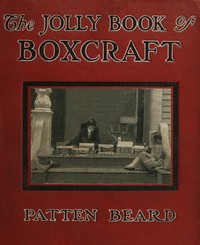
The Jolly Book of Boxcraft by Patten Beard
Let's clear something up right away: This is not a novel. If you're looking for a sweeping narrative with characters and drama, you won't find it here. 'The Jolly Book of Boxcraft' is exactly what the title promises—a cheerful, step-by-step guide to construction. Published in 1916, it's a collection of projects that transform the humblest of materials—discarded cardboard boxes, empty spools, and scraps of paper—into elaborate toys and playthings.
The Story
There's no traditional plot. Instead, the book unfolds as a series of creative invitations. Author Patten Beard acts as your enthusiastic guide, walking you through how to build a stunning array of items. You'll learn to craft a multi-room Doll's Apartment from a hat box, complete with cardboard furniture. You'll build a working Toy Train from oblong boxes and spools, a fantastic Circus with animals and performers, and even a detailed Japanese Tea House. Each project is explained with clear text and accompanied by charming line drawings and diagrams that show you exactly how to cut, fold, and paste your way to something marvelous.
Why You Should Read It
I picked this up as a curiosity, but I finished it feeling genuinely inspired. Its magic lies in its context and its spirit. Remember, this book came out during World War I. Resources were tight, and the mood was often grim. In that light, Beard's book feels like a radical act of optimism. It's saying, 'Look what you can do with what you already have. Look at the potential hiding in plain sight.' It champions imagination over consumption, patience over instant gratification. Reading it today, in our world of plastic toys and digital entertainment, it's a refreshing reminder of the deep satisfaction that comes from making something with your own hands. The projects are a direct link to childhoods from a century past.
Final Verdict
This book is a hidden gem for a specific reader. It's perfect for parents or educators looking for screen-free, creative projects with a historical twist. It's a treasure for makers, DIY enthusiasts, and historians of childhood who will appreciate its practical ingenuity and its snapshot of early 20th-century life. And honestly, it's for anyone who needs a little dose of uncynical, hands-on hope. You won't get a page-turning thriller, but you might just get the urge to find an old box and a bottle of glue.




Thomas Davis
1 year agoNot bad at all.