
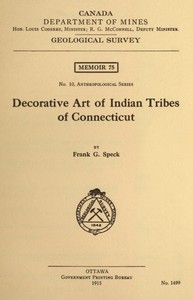
Decorative Art of Indian Tribes of Connecticut by Frank G. Speck
Let's be clear: this isn't a novel. There's no three-act plot. But the 'story' Frank Speck tells is incredibly compelling. In the early 1900s, he traveled around Connecticut, visiting Mohegan, Pequot, and other tribal communities. He sat with people, asked questions, and carefully drew and described what he saw. The book is his field report. He details how baskets were woven, how pouches were decorated with dyed porcupine quills, and the meanings behind the intricate patterns. He shows how art was woven into daily life, from ceremonial objects to everyday tools.
Why You Should Read It
You should read this because it connects you to a layer of local history that's often paved over. We drive past town names every day without a second thought. This book gives those places a deeper, human context. It's not just a catalog of objects; it's a record of skill, identity, and resilience. What hit me hardest was realizing Speck was talking to the last generation to practice some of these arts in the traditional way. His work captures a snapshot of a culture actively adapting and persevering. You get a profound respect for the artists—their knowledge of materials, their sense of design, and the sheer patience their work required.
Final Verdict
This is a must-read for anyone in New England with curiosity about the land's first peoples. It's perfect for local history enthusiasts, artists looking for inspiration from incredible traditional techniques, or anyone tired of the same old colonial narrative. It's a specialized book, for sure, but its heart is universal: it's about remembering, honoring, and ensuring that beauty isn't lost to time. Keep in mind it was written in 1915, so the language reflects that era, but look past the academic style to find the genuine care and urgency in Speck's mission.
Joseph Walker
1 year agoFinally a version with clear text and no errors.
Logan Smith
1 year agoThis is one of those stories where the storytelling feels authentic and emotionally grounded. Absolutely essential reading.