1

The three bears — A Reader’s Guide
59
15
Project Gutenberg
2025
Fairy tales; Children's stories; Bears -- Juvenile fiction
Readers of public-domain and historical texts
Project Gutenberg digital edition
en
Edition facts
Words: 4,292
Reading time: 19 min
Text sections: 3
Source:
Project Gutenberg record #76444
This 1911 picture-book retelling of the classic tale introduces a named bear family—Papa, Mamma, and Johnny Bear—and a lost girl called Goldenlocks, with a focus on domestic routines and woodland play.
Editorial Edition Score
4.5/5
★★★★★
★★★★★
Calculated from edition completeness, EPUB availability, text structure and catalogue metadata. Not a user rating.
Edition quality
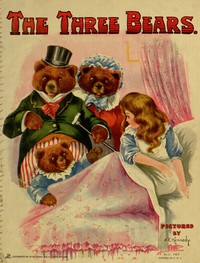
This 1911 edition of The Three Bears opens not with the bears’ empty house but with a named family—Papa, Mamma, and Johnny Bear—living in a cozy cottage near a large forest. The story begins with a planned walk, not an intrusion. Papa Bear proposes the outing; Mamma prepares three bowls of porridge; Johnny plays with his kite. The narrative lingers on the family’s departure: Papa takes his “big, silver-handled cane,” and they set off. The walk itself becomes a scene of rest and play: Johnny climbs a branch, picks flowers, chases butterflies, and eventually all three bears fall asleep in the woods. Only then does the lost girl, called Goldenlocks, appear. The structure thus delays the familiar trespass, building a domestic portrait before the disruption.
A Named Family and a Delayed Intrusion
Unlike many versions that begin with the bears’ empty house, this retelling introduces the bears as individuals with names and routines. The text specifies “Papa, Mamma and Johnny Bear” and describes their actions in detail: Mamma cooks “three bowls of hot porridge,” Papa fetches his cane, and Johnny brings his kite. The walk itself is given a full paragraph, with Johnny climbing a branch, picking flowers, and chasing butterflies. The family falls asleep one by one—Papa first, then Mamma, then Johnny—creating a tableau of domestic peace. Only after this extended setup does Goldenlocks appear, lost and hungry. This structural choice emphasizes the bears’ normalcy and makes the intrusion more pointed.
Goldenlocks: A Name and a Moral Ambiguity
The girl is called Goldenlocks, a name that links her to her hair, described as “so bright and yellow that it seemed like real gold.” The text notes she “had lost her way” and wandered “frightened and very hungry.” When she finds the bears’ cottage, she knocks, but nobody answers. She then “dared to peep through” and, seeing the porridge, “jumped into the dining-room.” The narrator explicitly states she “knew it was wrong.” This moral framing—acknowledging the trespass—is unusual for a picture-book version. The porridge test follows the familiar pattern: the biggest bowl is too hot, the middle-sized not sweet enough, the smallest “just right.” The excerpt cuts off before the chair and bed scenes, but the pattern is established.
Movement Between Scenes: From Cottage to Woods and Back
The story moves through three distinct settings: the bears’ cottage, the woods, and back to the cottage. The transition from cottage to woods is leisurely, with details of the walk and play. The woods are described as “a lovely, shady spot” where Johnny climbs a branch and picks flowers. The return is implied but not shown in the excerpt. The narrative rhythm alternates between domestic interiors and natural exteriors. The cottage is introduced as “cozy,” with a table set for porridge; the woods are bright and full of butterflies. This alternation creates a sense of safety and vulnerability. Goldenlocks’s movement from the woods to the cottage mirrors the bears’ own journey, but in reverse: she enters their home while they are absent.
Recurring Details: Porridge, Sleep, and the Kite
Several details recur and gain significance. Porridge appears first as a planned meal, then as an object of temptation. Sleep overtakes each bear in turn, creating a pattern of vulnerability. Johnny’s kite, mentioned early, is a symbol of play and freedom; it appears only in the opening scene. The bears’ names—Papa, Mamma, Johnny—are repeated, reinforcing the family unit. Goldenlocks’s name is also repeated, linking her to her defining feature. The text uses simple, rhythmic language: “There was once a happy little family of Bears.” These recurring elements give the story a cohesive texture, even in the excerpt. The illustrations by A. E. Kennedy likely amplify these visual motifs, though only the text is available here.
Readers familiar with the classic tale will notice this version’s emphasis on the bears’ domestic life before the intrusion. The naming of the bears and the girl, the moral note about Goldenlocks’s wrongdoing, and the leisurely woodland scene all distinguish this retelling. Pay attention to how the story balances sympathy between the bears and the lost child. The excerpt ends before the resolution, but the pattern of three—three bowls, three chairs, three beds—is already in motion.
Reader reflection
Take a moment to reflect on this book
Create a short personal record of your experience with this book.
Your progress
0
/
10
2
What was your overall reaction to the book?
3
Would you recommend this book to another reader?
4
How demanding did the text feel?
5
How did the pace of the book feel?
6
Did the book offer a fresh perspective?
7
Could you follow the author’s main argument?
8
Did this book create an emotional response?
9
What changed or sharpened your thinking?
10