1

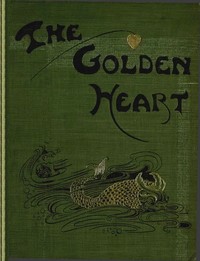
The golden heart, and other fairy stories — Text and Context
1606
15
Project Gutenberg
2024
Fantasy literature; Fairy tales; Children's stories
Readers of public-domain and historical texts
Project Gutenberg digital edition
en
Edition facts
Words: 43,968
Reading time: 192 min
Text sections: 5
Source:
Project Gutenberg record #73964
Violet Jacob's 1904 collection of nine fairy stories uses recurring images of water, enchanted objects, and journeys across fantastical landscapes. The opening tale, 'The Golden Heart,' establishes a pattern of dialogue between human and magical creatures, while 'Grimaçon' and 'The Cherry Trees' explore movement between domestic and enchanted realms.
Editorial Edition Score
4.7/5
★★★★★
★★★★★
Calculated from edition completeness, EPUB availability, text structure and catalogue metadata. Not a user rating.
Edition quality
In 'The Golden Heart,' the first story of Violet Jacob's 1904 collection, a little boy lying in a fishing smack strikes up a conversation with a fish—an early sign of the direct, unpretentious dialogue between human and magical beings that runs through these nine tales. The boy's wonder at the depth of the sea and the fish's matter-of-fact reply ('That depends on what you are accustomed to') sets a tone where the extraordinary is treated with everyday familiarity.
Jacob's stories frequently shift between enclosed domestic spaces and open, enchanted landscapes. In 'Grimaçon,' the narrative moves from a palace garden to a marsh ruled by an enchanter with a glass tower, while 'The Cherry Trees' and 'Jack Frost' use seasonal change as a backdrop for transformation. These movements are often triggered by water—floods, fountains, or the sea—which acts as both a boundary and a passage.
Water as Threshold and Trap
Water appears repeatedly as a force that both separates and connects. In 'The Golden Heart,' the sea is the setting for the boy's encounter with the fish, and later a flood carries away Princess Moonflower in 'Grimaçon.' The flood is described as a punishment for calling on a stream 'without a good reason,' and it leaves the Queen 'in hysterics' while the dwarf Grimaçon searches for a dropped enchanted leaf. The enchanter's glass tower reflects everything on the marsh, turning water into a surveillance device. In 'The Cherry Trees,' the daffodil princess's fate is tied to a spring thaw. Jacob uses water not as a mere backdrop but as an active agent that propels characters into new, often dangerous situations.
Enchanted Objects and Their Keepers
Several stories hinge on small, potent objects: the enchanted leaf in 'Grimaçon,' the golden heart of the title tale, and the peacock's tail in the story of that name. These items are not simply magical tools; they carry emotional weight. The dwarf Grimaçon picks up the dropped leaf and weeps, remembering his mistress. The leaf becomes a clue and a motivator for a quest. Similarly, the sword inherited from the King's grandfather—with a topaz hilt and Damascus steel—is taken on the journey not for its practical use but for its luck. Jacob often pairs these objects with characters who are small or overlooked: a little boy, a dwarf, a queen in disguise. The objects serve as extensions of their owners' desires or grief.
Movement Between Realms: Palace, Marsh, and Mountain
The stories frequently stage abrupt transitions between settings. In 'Grimaçon,' the action moves from the King of the Crystal Mountains' palace—with its fountains and terraces—to the enchanter's marsh, where crocodiles lurk. The dwarf and the King set out 'to traverse the whole universe,' but the journey is described in terms of specific, vivid locations rather than abstract distance. 'The Dovecote' shifts from a queen's chamber to a room behind fiery roses. 'Jack Frost' begins on a weathercock atop a larch tree. These movements are rarely explained; characters simply find themselves in new places, and the reader must adjust. Jacob's narrative voice treats these leaps as natural, emphasizing the strangeness of the settings through concrete details—the glass tower, the fiery roses, the weathercock—rather than through exposition.
Voice and the Unreliable Narrator
Jacob's narrators often intrude with wry asides or shifts in perspective. In 'The Golden Heart,' the boy wonders if fish-fathers tell their children to sleep, and the fish replies with a dry remark about the temperature. In 'Grimaçon,' the narrator notes that the Queen was 'furiously angry' but 'soon appeased' when given control of the kingdom. The dwarf's grief is described with comic exaggeration: 'He sighed, he wept, he tore his hair, his cries were heard all over the palace.' This blend of sympathy and detachment keeps the tone unpredictable. The narrators also withhold information—the dwarf conceals Moonflower's high birth—creating gaps that the reader must fill. These narrative choices give the stories a conversational, slightly ironic quality that distinguishes them from more solemn fairy-tale traditions.
Readers approaching this collection should attend to the way Jacob balances the whimsical and the perilous. The stories reward attention to small details—a dropped leaf, a fish's remark, a sword's hilt—that later prove significant. The movement between scenes is swift and often unexplained, so it helps to read each tale in one sitting. The illustrations by May Sandheim, listed in the contents, offer visual counterparts to the text's recurring motifs of flowers, water, and fantastical creatures.
Reader reflection
What was your reading experience?
Capture what you thought, learned, and would like to remember.
Your progress
0
/
10
2
How much did you enjoy the reading experience?
3
Would you encourage someone else to read it?
4
How much effort did this book require?
5
Did it raise ideas you would like to talk about?
6
How would you describe its reading pace?
7
Did anything about the book feel genuinely new?
8
Is this a title worth rereading?
9
Which lesson or insight stayed with you?
10