1

The Cruise of the Little Dipper, and Other Fairy Tales — Reading Companion
1948
8
Project Gutenberg
2020
Fairy tales
Readers of public-domain and historical texts
Project Gutenberg digital edition
en
Edition facts
Words: 25,121
Reading time: 110 min
Text sections: 4
Source:
Project Gutenberg record #61294
An editorial note on Susanne Langer's 1923 fairy-tale collection, focusing on its structural patterns, recurring images of transformation, and movement between domestic and fantastical scenes.
Editorial Edition Score
4.6/5
★★★★★
★★★★★
Calculated from edition completeness, EPUB availability, text structure and catalogue metadata. Not a user rating.
Edition quality
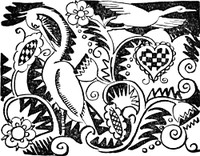
Susanne Langer's The Cruise of the Little Dipper, and Other Fairy Tales (1923) opens with a boy who has no name, no cap, and no shoes—a figure stripped to essentials. The collection's four tales share a fondness for threshold moments: a poor boy whistling on a beach, a dwarf entering a tower, a princess feeding goldfish in a fountain. These scenes anchor the fantastic in everyday textures—driftwood, dry bread, a leather apron—before the narrative shifts into enchanted realms. Helen Sewell's illustrations, mentioned on the title page, likely echo this interplay of homely detail and wonder.
Thresholds and Transitions
The stories repeatedly stage movement from one state to another through physical thresholds. Birdling, the nameless boy, is called from gathering driftwood to building a boat; Peter Dwarf changes from silken clothes to a leather apron before donning armor; Princess Zarashne is watched by animals who can see over the palace wall. These transitions are marked by concrete objects—a key to iron doors, a suit of mail, a crystal bowl—that serve as both plot devices and symbols of passage. The narrative voice lingers on the moment of crossing: Peter 'putting the key into the lock' and using 'all his strength' to swing open the doors. Such scenes suggest that transformation requires effort, not magic alone.
Recurring Images of Confinement and Release
Images of binding and freeing recur across the tales. Birdling is confined by his great-aunt's strict rules—no sugar, no butter, no whistling—and by the daily chore of gathering wood. Peter Dwarf confronts a wax statue melting above a fire, a figure of entrapment. The Princess Minka is enchanted into a white cat, and the Queen's incantations keep her imprisoned. Release comes through decisive action: Peter cuts off the Queen's head with a single sword stroke, and the spell breaks. The language of the text emphasizes suddenness—'At that moment everything grew dark; a noise like thunder'—followed by a flood of light. This pattern of compression and expansion gives the collection a rhythmic, almost musical structure.
The Role of Animals and Objects
Animals and objects carry narrative weight beyond mere decoration. The white cat Minka is both a pet and an enchanted princess; the bird of paradise makes 'sweet music' for Zarashne; the pet white mouse dances. These creatures are not passive: the cat leaps at the Queen and scratches her, buying Peter time. Objects too are active: the key 'fits' the iron doors, the sword delivers the fatal stroke. Even the driftwood Birdling collects becomes material for a boat. The text treats these items with matter-of-fact specificity—'four buckwheat cakes with syrup'—grounding the fantastical in the tangible. This concreteness prevents the tales from floating into abstraction.
Movement Between Domestic and Fantastic Spaces
The stories shuttle between cramped interiors and open landscapes. Birdling's 'small, dark house beside the sea' contrasts with the beach where other children build sailboats. Peter Dwarf moves from a tower chamber with a 'mighty fire' to a palace with a 'great rose-garden and a banquet hall.' Zarashne's palace garden, with its fountain and goldfish, is set against the 'yellow desert sand' beyond the wall. The narrative often returns to domestic details after magical climaxes: after the Queen's death, the King eats buckwheat cakes; after the wedding, Peter and Minka rule 'in peace and happiness.' This oscillation between wonder and routine gives the collection a satisfying structural balance.
Readers may find it useful to track how each tale handles its opening image—a nameless boy, a dwarf, a princess—and where that image reappears in transformed form. Langer's prose rewards attention to small, repeated motifs: the whistle, the key, the wax figure. The collection's brevity (about 25,000 words) invites rereading, and the four tales can be compared for their shared structural DNA without assuming a single moral or theme.
Reader reflection
Record your reading impressions
A brief reflection can help important ideas stay with you longer.
Your progress
0
/
10
2
How did the book work for you overall?
3
Is this a title you would suggest to others?
4
How much effort did this book require?
5
Did the book give you something worth debating?
6
Which aspect of the book did you value most?
7
Was the book moving at the right speed?
8
Do you expect to return to this book?
9
Which lesson or insight stayed with you?
10