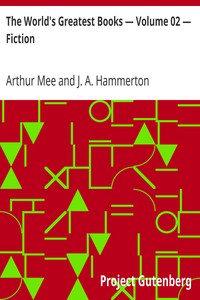
The World's Greatest Books — Volume 02 — Fiction by Arthur Mee and J. A. Hammerton
Let's clear something up right away: this isn't a novel. The World's Greatest Books — Volume 02 — Fiction is a doorstop of an anthology from 1910, compiled by editors Arthur Mee and J.A. Hammerton. Their mission was huge: to gather the finest fiction from across the globe into one accessible series for the everyday reader. This volume is a snapshot of their literary hall of fame.
The Story
There's no single plot. Instead, you open the book to find a curated tour of early 20th-century literary taste. You might jump from a chunk of Charles Dickens' David Copperfield to a segment from Jane Austen's Pride and Prejudice. You'll encounter Russian giants like Dostoevsky (Crime and Punishment) and French masters like Balzac. But you'll also find names that have faded from modern best-of lists—authors like Bulwer-Lytton or Whyte-Melville, who were titans in their day. The 'story' is the journey through this particular vision of a literary canon.
Why You Should Read It
This book is a conversation starter. It's fascinating to see what was considered 'great' over a hundred years ago. Some choices feel timeless (hello, Jane Austen), while others make you scratch your head and dive into Wikipedia. Reading it feels less like studying literature and more like exploring a museum of taste. You get to question the editors' picks, disagree with them, and discover forgotten gems. It also gives you a real sense of how people a century ago might have first encountered these classic stories—in condensed forms, selected by trusted guides. It makes you think about who gets to decide what's 'great' and how those decisions change.
Final Verdict
This is a perfect pick for curious readers and book history nerds. If you love classic literature and enjoy seeing it in a new context, you'll have a blast. It's also great for anyone who likes to browse—you can dip in and out for an hour without commitment. It's probably not for someone looking for a page-turning, single narrative. Think of it as the ultimate literary time capsule. You're not just reading stories; you're reading a century-old opinion on which stories matter most. And that, in itself, is a pretty great story.

Donna White
10 months agoAs someone who reads a lot, the depth of research presented here is truly commendable. I would gladly recommend this title.