
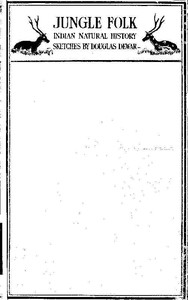
Jungle Folk: Indian Natural History Sketches by Douglas Dewar
Douglas Dewar’s Jungle Folk is a unique window into the natural world of early 20th-century India. It’s not a novel with a plot, but a series of beautifully written sketches. Dewar, a man with a day job in the civil service, used his spare time as a dedicated observer. He simply went out, found a spot to sit, and watched. The book is his notebook come to life, filled with accounts of what he saw: the intricate nest of a weaver bird, the clever tactics of a hunting spider, the noisy squabbles between parakeets and crows.
The Story
There’s no traditional narrative. Instead, each chapter focuses on a different creature or scene. Dewar might spend one piece figuring out why certain birds sing at dawn, and another describing the chaotic beauty of a monsoon-soaked forest. He follows the life cycle of frogs in a pond and deciphers the alarm calls of langur monkeys. The ‘story’ is the slow, patient revelation of how these animals live, interact, and survive. It’s the unfolding drama of an ecosystem, told one careful observation at a time.
Why You Should Read It
What makes this book special is Dewar’s voice. He’s not a distant scientist; he’s a curious neighbor peeking over the hedge. He gets frustrated when the birds won’t cooperate, and he celebrates small discoveries. His writing strips away the complexity and lets you see the animal for its character—the pompous crow, the anxious squirrel, the relentless ant. Reading it, you start to see your own surroundings differently. You’ll notice the birds on your balcony or the insects in the garden with fresh eyes, wondering about their own tiny stories. It’s a masterclass in attention.
Final Verdict
Perfect for nature lovers, birdwatchers, or anyone feeling digitally drained and in need of a quiet, thoughtful escape. It’s also a fascinating read for those interested in colonial-era India from an unexpected, apolitical angle. If you enjoy the calm, precise observations of writers like Gerald Durrell or even the quiet moments in a Jim Corbett tale, you’ll find a friend in Douglas Dewar. Just be warned: after reading, you might find yourself staring out the window a lot more often.
Patricia Sanchez
1 year agoI was skeptical at first, but it creates a vivid world that you simply do not want to leave. Exactly what I needed.
Jennifer Moore
1 year agoHonestly, the arguments are well-supported by credible references. One of the best books I've read this year.








Joshua Garcia
7 months agoA must-have for anyone studying this subject.