About 704 minutes
The High History of the Holy Graal — Story, Setting & Ideas
Folklore
161,875 recorded words. 15 minutes difference from this book's estimate.
View Gutenberg source #750
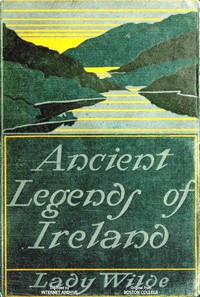
For Ancient legends, Mystic Charms & Superstitions of Ireland With sketches of the Irish past — A Closer Reading, the stored edition analysis reports 165,165 words, 11 hr 59 min estimated reading time, and 31 detected text sections.
The text analysis averages about 28.2 words per sentence, while the detected sections provide another way to judge how the source is divided.
Project Gutenberg metadata also associates the work with “Folklore -- Ireland,” connecting these edition facts with the source record’s subject description.
Explore this collection
These alternatives are selected using recorded categories and estimated reading time.
About 704 minutes
Folklore
161,875 recorded words. 15 minutes difference from this book's estimate.
View Gutenberg source #750About 678 minutes
Folklore
155,737 recorded words. 41 minutes difference from this book's estimate.
View Gutenberg source #48771About 666 minutes
Folklore
153,128 recorded words. 53 minutes difference from this book's estimate.
View Gutenberg source #58694Search stored excerpts and compare books → Choose by your preferences →
Choices use stored catalog measurements. Estimates vary with reading speed. A shared category is a catalog label, not a claim that two books have the same argument or literary quality.
Search reads excerpt text stored with this catalog and links to its associated Gutenberg record. The connection is stored in the site database; this tool does not recheck that every excerpt is word-for-word identical to that external record. Excerpt search does not cover every chapter and does not verify historical publication dates.
Catalog snapshot checked: 2026-09-25. Coverage: 94 public books, 94 available source excerpts.
Calculated from edition completeness, EPUB availability, text structure and catalogue metadata. Not a user rating.
Total of 100 points, scaled to a 2.5-5.0 range. Editions with an empty description or a missing EPUB file are not scored.
Public-domain source text
The source text is kept in the dedicated reader, separate from this catalogue record and its commentary.
Lady Wilde's Ancient Legends, Mystic Charms & Superstitions of Ireland opens with a table of contents that reads like a taxonomy of the uncanny: “The Horned Women,” “The Evil Eye,” “Fairy Music,” “The Priest’s Soul.” The excerpts show a collector’s hand, grouping narratives by theme—witchcraft, fairy interference, domestic spells—rather than by region or chronology. Wilde’s introduction, not included here, likely frames these as remnants of a vanishing oral tradition. The first tale, “The Horned Women,” establishes a pattern: a supernatural intrusion met with ritual countermeasures, ending in the community’s restoration of order. The prose is direct, often reporting dialogue and actions without embellishment, as if transcribing a spoken account.
The excerpt titled “The Wicked Widow” exemplifies Wilde’s method. A young farmer, Hugh Connor, marries Mary Leydon, spurning a widow who then learns “witch secrets and spells” from a fairy woman. The widow’s revenge is domestic: butter will not churn, cakes burn, a gown is ruined, turkeys drown, and a holy picture falls into the fire. The narrative accumulates specific, material misfortunes—each a breach of household order. When a stranger in a blue cloak identifies the “Evil Eye,” the story pivots to diagnosis and remedy. Wilde does not moralize; she lets the sequence of calamities speak. The widow’s eventual exposure and flight restore the community’s “fair and equal rights,” a phrase that ties supernatural harm to social justice.
Wilde inserts explanatory passages that read like field notes. “The evil spells over milk and butter are generally practised by women,” she writes, “and arise from some feeling of malice or envy against a prosperous neighbour.” The spell requires that “some portion of the milk is first given by consent,” so people are warned not to give milk to strangers. Tramps “may be witches in disguise.” These asides reveal a belief system where everyday hospitality carries risk. The churn becomes a site of moral testing: visitors must “give a hand to the churn, and say, ‘God bless all here.’” Wilde’s catalog of precautions—drink milk in the house, never let it be carried away—shows how folklore codifies practical suspicion. The prose is plain, almost instructional, as if compiling a manual for survival.
When Mary Connor breaks down, a stranger appears: “an old woman with a blue cloak, and the hood of it over her head.” She listens, then declares, “Some one with the Evil Eye comes.” The stranger’s authority is unearned; she simply “knows the mysteries.” Wilde’s narrative does not explain how the stranger knows, nor does it question her. The diagnosis is accepted, and the story moves toward resolution. This pattern—crisis, supernatural explanation, community action—recurs throughout the excerpts. The stranger’s role is functional: she translates misfortune into a known category of harm. Wilde’s reporting of such encounters suggests a culture where expertise is embodied in wandering figures, not institutions. The blue cloak and hood are the only details; the stranger remains a type, not a character.
Wilde’s prose retains markers of oral storytelling. Sentences are paratactic: “The best dish fell down of itself off the dresser and broke; or the rain got in through the roof.” Events are listed without causal connectives. Dialogue is reported in simple past tense: “So Mary told her all her misfortunes.” The narrator rarely intrudes with judgment; the moral is embedded in the outcome—the widow vanishes, butter returns to market. These features suggest Wilde transcribed tales with minimal literary polish. The table of contents, with its 31 sections, implies a systematic collection, but the excerpts show no overarching argument. Each tale stands alone, a discrete instance of the supernatural in domestic life. Readers should approach the book as a cabinet of specimens, not a continuous narrative.
Lady Wilde’s collection rewards a reader who attends to small details: the color of a cloak, the phrase “God bless all here,” the precise list of ruined goods. These are not decorative; they are the evidence from which folk belief is reconstructed. The book is best read in fragments, one or two tales at a time, letting the recurring patterns—the witch neighbor, the helpful stranger, the spoiled butter—accumulate into a portrait of a world where the supernatural is as ordinary as a broken dish.
Lady Wilde's tales of butter stolen by fairy folk always made me think of a quieter theft—the way time slips away. I recall our copy of Ancient Legends resting beside a shared shelf partner, whispering of kinship between ages. In the Time That Was — Edition Insights holds that same patient hush, a memory of days we can almost touch.
Use these questions to collect your thoughts before moving on.