
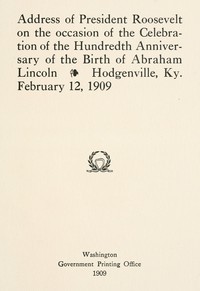
Address of President Roosevelt on the occasion of the celebration of the…
Let's set the scene. It's 1905 in St. Louis. The Louisiana Purchase Exposition (think a huge World's Fair) is in full swing, celebrating 100 years since the U.S. bought a massive chunk of land from France. The country is feeling pretty good about itself—industrialized, expanding, a new player on the world stage. President Theodore Roosevelt, the man who charged up San Juan Hill, is the star speaker for 'Louisiana Purchase Day.'
The Story
This isn't really a story with a plot. It's a speech, a moment frozen in time. Roosevelt walks up to the podium with a nation listening. He talks about the incredible achievement of the Louisiana Purchase and the westward expansion that followed. He praises the pioneers and the spirit of adventure. But then, he pivots. He doesn't let the celebration become pure myth-making. He directly confronts the darker side: the broken treaties with Native American tribes, the violence of conquest, and the moral ambiguity of taking a continent. He argues that with great power and great land comes great responsibility—a duty to govern wisely and justly for all people within the nation's borders. The speech becomes less about patting the past on the back and more about issuing a challenge for the future.
Why You Should Read It
What grabbed me was Roosevelt's voice. It's not the dry, careful language of modern politics. It's forceful, confident, and morally charged. You can almost hear him saying it. He doesn't shy away from the ugly truths, which is startling for a victory-lap speech. He acknowledges the 'wrongdoing' to Indigenous peoples, which was pretty radical for the time. Reading this, you get a clear sense of the national conversation in the early 1900s: the pride, the anxiety, the debate about America's role. It shows that the arguments about history, legacy, and national identity are not new. We're still wrestling with how to tell the full story of America.
Final Verdict
Perfect for history buffs who want to go beyond dates and battles to hear the actual words and worries of the era. It's also great for anyone interested in politics or leadership, as a study in how a leader frames national pride alongside national conscience. Because it's short and focused, it's a fantastic, digestible primary source for students or casual readers who think history is boring—this will prove them wrong. If you've ever wondered what people were actually thinking and arguing about over a hundred years ago, this is your direct line to that moment.
Deborah Wilson
1 year agoHonestly, the plot twists are genuinely surprising. A true masterpiece.
Deborah Jackson
7 months agoI had low expectations initially, however the pacing is just right, keeping you engaged. Absolutely essential reading.
Ethan Ramirez
1 year agoTo be perfectly clear, the flow of the text seems very fluid. I couldn't put it down.
Noah Lee
1 year agoGreat reference material for my coursework.








Eric Jones
2 weeks agoHello Vuiya Com Owner, My name is Eric and I’m betting you’d like your website Vuiya Com to generate more leads. Here’s how: Web Visitors Into Leads is a software widget that works on your site, ready to capture any visitor’s Name, Email address, and Phone Number. It signals you as soon as they say they’re interested – so that you can talk to that lead while they’re still there at Vuiya Com. Visit https://blastleadgeneration.com to try out a Live Demo with Web Visitors Into Leads now to see exactly how it works and even give it a try… it could be huge for your business. Plus, now that you’ve got their phone number, with our new SMS Text With Lead feature, you can automatically start a text (SMS) conversation quickly… which is so powerful because connecting with someone within the first 5 minutes is 100 times more effective than waiting 30 minutes or more later. The new text messaging feature lets you follow up regularly with new offers, content links, even just how are you doing? notes to build a relationship. Everything I’ve just described is extremely simple to implement, cost-effective, and profitable. Visit https://blastleadgeneration.com to discover what Web Visitors Into Leads can do for your business, potentially converting up to 100 times more eyeballs into leads today! Eric PS: Studies show that 70% of a site’s visitors disappear and are gone forever after just a moment. Don’t keep losing them. Web Visitors Into Leads offers a complimentary 14-day trial – and it even includes International Long Distance Calling. You have customers waiting to talk with you right now… don’t keep them waiting. Visit https://blastleadgeneration.com to try Web Visitors Into Leads now. If you'd like to Want to receive fewer emails, or none whatsoever? Update your email preferences by visiting https://blastleadgeneration.com/unsubscribe.aspx?d=vuiya.com