
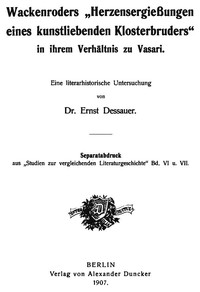
Wackenroders "Herzensergießungen eines kunstliebenden Klosterbruders" in ihrem…
If you've ever heard of Wilhelm Heinrich Wackenroder's Herzensergießungen eines kunstliebenden Klosterbruders (Heartfelt Outpourings of an Art-Loving Monk), you probably know it as a key text of early German Romanticism—a short, explosive celebration of art as a spiritual experience. Ernst Dessauer's book isn't a reprint or a simple summary. Instead, it's a fascinating investigation into the text itself. Dessauer acts like a literary archaeologist, carefully examining how this passionate work was constructed, its historical context, and the seismic impact it had.
The Story
There isn't a plot in the traditional sense. The 'story' here is Dessauer's intellectual journey into Wackenroder's world. He introduces us to the original text: a collection of essays and stories presented as the writings of a young monk, pouring out his soul about artists like Raphael and Dürer. Art isn't a craft for this monk; it's a divine channel, a way to feel God's presence. Dessauer then steps back and asks the big questions. How did this book come to be? What was it arguing against (hint: the cold rationalism of the Enlightenment)? How did its fragmented, emotional style help create a whole new way of thinking about creativity? He unpacks the ideas, the influences, and the sheer novelty of claiming that true art comes from the heart, not the rulebook.
Why You Should Read It
This book completely changed how I see the Romantic movement. I used to think of it as just a bunch of poets feeling sad about nature. Dessauer shows it was a radical revolution. By focusing on Wackenroder's little book, he makes a huge idea accessible. You feel the urgency of Wackenroder's message—his desperation to save art from being analyzed to death. What's great is that Dessauer doesn't drown you in theory. He connects the dots between the monk's passionate cries and the art, music, and literature that followed. It makes you appreciate the courage it took to publish something so openly emotional and anti-intellectual in an age of reason. You finish it seeing the familiar works of Romanticism not as old classics, but as the shocking, heartfelt manifestos they once were.
Final Verdict
Perfect for curious readers who enjoy history, art, or philosophy but want to avoid stuffy academic writing. It's a must if you're interested in how artistic movements are born from a single, powerful idea. You'll get the most out of it if you have a passing familiarity with the Romantic era, but Dessauer provides enough context for a motivated beginner. Think of it as a backstage pass to one of the most important conversations in the history of art. If you've ever felt that a piece of music or art spoke directly to your soul, this book helps explain why that feeling is so powerful, and how one young writer fought to make that feeling the entire point.




Jennifer Hernandez
1 year agoFive stars!