1

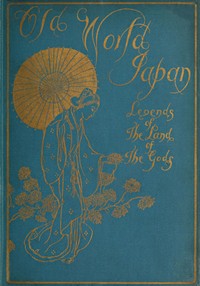
Old-World Japan: Legends of the Land of the Gods — A Reader’s Guide
645
14
Project Gutenberg
2014
Legends -- Japan; Mythology, Japanese
Readers of public-domain and historical texts
Project Gutenberg digital edition
en
Edition facts
Words: 23,031
Reading time: 101 min
Text sections: 24
Source:
Project Gutenberg record #46863
Frank Rinder retells Japanese myths from the Kojiki and Nihongi, focusing on the God-period and lesser-known legends. The preface notes Chinese influence on Japanese culture, and the tales feature deities, nature spirits, and mortals interacting with the divine, with vivid sensory details like music and fragrance.
Editorial Edition Score
4.8/5
★★★★★
★★★★★
Calculated from edition completeness, EPUB availability, text structure and catalogue metadata. Not a user rating.
Edition quality
Frank Rinder's Old-World Japan: Legends of the Land of the Gods draws primarily on the Kojiki and Nihongi, eighth-century chronicles that blend history and mythology. The preface acknowledges that Chinese civilisation influenced Japan, citing the example of curved jewels in Ama-terasu's necklace—stones never found in Japan but common in China. Rinder abbreviates many-syllabled Japanese names to avoid wearying the reader, and he selects tales for their beauty and charm rather than comprehensive representation.
Divine and Mortal Encounters
The excerpts show a pattern of mortals meeting divine beings, often with tension over trust or possession. In the moon-maiden tale, the fisher Hairukoo demands a dance before returning her feather robe, prompting the goddess's anger: “The wicked oni will take you for their own, if you doubt the word of a goddess.” The robe's feathers, given by Heavenly Birds, symbolize love and trust. Similarly, in “The Great Fir Tree of Takasago,” O-Matsue's beauty is described through natural metaphors—her eyes like an ocean-pool, her smile like sunshine on Lake Biwa—and she weaves robes for peasants while hearing stories of the jelly-fish who lost his shell and the Blessed Island of Eternal Youth.
Sensory Richness in Setting and Action
Rinder's prose emphasizes sensory details: sound, sight, and smell. The moon-maiden's dance is accompanied by a stringed instrument, with notes “clear and infinitely sweet.” She skims the sea surface, touches pine tops, and moves through bamboo and cherry blossoms. After she departs, Hairukoo is left “alone with the sound of the sea, and the fragrance of the pines.” In the Takasago tale, O-Matsue sings a song about cherry flowers fluttering down, and the fir tree's fallen needles form a soft couch. These recurring elements—music, fragrance, natural textures—anchor the supernatural events in a vivid physical world.
Abbreviated Names and Selective Storytelling
Rinder states in the preface that he abbreviates many-syllabled Japanese names to avoid wearying the reader. The excerpts show this practice: “Ama-terasu” for Amaterasu, “Hairukoo” for a longer original. He also selects tales unfamiliar to the English-reading public, focusing on “beauty and charm of incident and colour” over comprehensive representation. The preface notes that the first six tales are founded on “the most significant and picturesque incidents” of the God-period, including the creation of Japan and Izanagi's descent to Hades. This selective approach shapes the collection as an introduction to lesser-known legends rather than a scholarly survey.
Readers may notice how Rinder balances mythic grandeur with intimate, sensory moments—the fragrance of pines, the sound of the sea, the shimmer of a feather robe. The abbreviated names and selective tales offer a curated entry into Japanese mythology, but the preface's acknowledgment of Chinese influence and the use of primary sources like the Kojiki ground the work in historical context. Approach these legends as crafted retellings that prioritize atmosphere and incident over exhaustive detail.
Reader reflection
What was your reading experience?
Capture what you thought, learned, and would like to remember.
Your progress
0
/
10
2
Did this book hold your interest?
3
How likely are you to recommend this book?
4
What was the reading difficulty like?
5
Did you gain anything practical from the text?
6
Did any part of the book stay with you emotionally?
7
How strong was your personal connection to the text?
8
Did the book offer a fresh perspective?
9
Which lesson or insight stayed with you?
10