
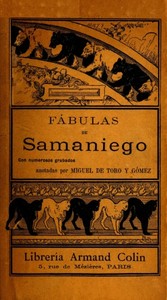
Fábulas by Félix María Samaniego
Let's be clear: 'Fábulas' is not a novel with a single plot. Think of it as a greatest hits album of animal wisdom. Samaniego took the ancient tradition of Aesop's fables and gave it a distinctly Spanish flair, publishing his collection in the late 1700s. Each fable is a self-contained story, rarely longer than a page, where animals act out very human dramas.
The Story
There's no overarching narrative. Instead, you open the book to a world where a crow drops its cheese after falling for a fox's flattery. You see a team of animals try to play music together with disastrous results because they refuse to cooperate. A tortoise, tired of being mocked, challenges a hare to a race. You know how these end, but Samaniego's wit is in the telling. He sets the scene quickly, lets the animal's folly unfold, and then delivers a punchy moral at the end that often feels like a gentle (or not-so-gentle) elbow to the ribs.
Why You Should Read It
I picked this up thinking it would be a simple children's book, but I was wrong. The genius is in the timelessness. When the ant refuses to help the starving grasshopper, you're forced to think about responsibility and charity. When the wolf makes up excuses to attack the lamb, you see the mechanics of bullying and false justification. Samaniego was critiquing the vanity, greed, and hypocrisy he saw in the courts and society of his day, but swap 'court' for 'social media' or 'office,' and it all still fits. The characters are instantly recognizable because they live in all of us. It's also just plain fun—the humor is dry, smart, and the lessons never feel like a lecture.
Final Verdict
This is a perfect book for anyone who likes their philosophy with feathers and fur. It's great for parents to read with kids, sparking conversations about behavior. It's ideal for readers who want something thoughtful but don't have time for a huge novel—you can read a fable in a minute and ponder it all day. And honestly, it's a must for anyone who needs a clever, centuries-old reminder not to be the dog who loses the real bone chasing a watery reflection.
The copyright for this book has expired, making it public property. Thank you for supporting open literature.
Elizabeth Johnson
6 months agoHaving read the author's previous works, the cross-referencing of different chapters makes it a great study tool. Well worth the time invested in reading it.
Emily Jones
1 year agoGreat value and very well written.
Joseph Thomas
6 months agoThe research depth is palpable from the very first chapter.
Barbara Lee
8 months agoBefore I started my latest project, I read this and the chapter on advanced strategies offers insights I haven't seen elsewhere. Well worth the time invested in reading it.

William Martinez
1 year agoThe clarity of the introduction set high expectations, and the logic behind each conclusion is easy to follow and verify. I'm glad I chose this over the other alternatives.