1

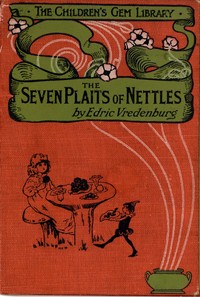
The Seven Plaits of Nettles, and other stories — Story, Setting & Ideas
(0 User reviews)
129
Project Gutenberg
2020
Not confirmed
Fairy tales; Children's stories
Readers of public-domain and historical texts
Project Gutenberg digital edition
en
Edition facts
Words
11,163
Reading time
49 min
Text sections
17
The source record for The Seven Plaits of Nettles, and other stories — Story, Setting & Ideas measures this digital text at 11,163 words, 49 min estimated reading time, and 17 detected text sections.
The text analysis averages about 17.0 words per sentence, while the detected sections provide another way to judge how the source is divided.
Project Gutenberg metadata also associates the work with “Fairy tales,” connecting these edition facts with the source record’s subject description.
Source:
Project Gutenberg record #63437
Edric Vredenburg's collection of five fairy tales uses recurring images of cold, hunger, and transformation. The stories move between domestic hardship and magical resolution, with a structural pattern of escalating poverty followed by supernatural intervention.
Editorial Edition Score
4.7/5
★★★★★
★★★★★
Calculated from edition completeness, EPUB availability, text structure and catalogue metadata. Not a user rating.
How this score is calculated
- Description quality20 pts
- Title & short description10 pts
- Source metadata20 pts
- Text length15 pts
- Chapters / structure15 pts
- EPUB file integrity20 pts
Total of 100 points, scaled to a 2.5-5.0 range. Editions with an empty description or a missing EPUB file are not scored.
Edition quality
Public-domain source text
Read the source text
The source text is kept in the dedicated reader, separate from this catalogue record and its commentary.
Edric Vredenburg's collection of five fairy tales repeatedly returns to images of cold, hunger, and scarcity. In the title story, the kingdom's people begin to starve and fires are only known in the houses of the richest. The same chill recurs in "The Three Snowflakes," where the first snow of the year threatens a long, hard winter, and in "The Princess and the Frog," where the exiled king and princess sleep in the woods and eat only berries. These physical privations are not merely atmospheric; they drive the plots forward, forcing characters into desperate action—Ellaleen's nettle-plaiting, Ruth's prayer, the princess's flight.
Movement from Poverty to Palace
The collection's structure follows a clear arc: each story begins with a state of lack—empty treasuries, barren cupboards, lost kingdoms—and moves toward a resolution that restores abundance. In "The Seven Plaits of Nettles," the bad King's extravagance empties the mint and treasury, leading to starvation. Ellaleen's quest to weave nettle plaits reverses this decline, culminating in a wedding that brings prosperity. "When Our Ship Comes Home" and "The Golden Wish" similarly hinge on sudden fortune. The pattern is so consistent that the reader can anticipate the turn, yet Vredenburg varies the agent of change: a clever girl, a magical ship, a wish-granting fish, a prince's kiss, or an act of faith.
Recurring Images of Cold and Warmth
Cold is the dominant sensory detail across the stories. In "The Three Snowflakes," Ruth shudders at the snow that melts on her brick floor, and the narrative contrasts the white landscape with the grey river. In "The Princess and the Frog," the exiled king and princess sleep in the woods, miserable and hungry. Warmth appears only as a promise: the sun breaks through snow clouds as Ruth prays, and the enchanted prince leads the princess to a beautiful country. The title story lacks winter imagery but substitutes the cold of poverty—"fires were only known in the houses of the richest." This thermal polarity gives the collection a tangible, almost physical tension between deprivation and comfort.
The Role of Small Creatures and Objects
Vredenburg repeatedly uses small, vulnerable beings as catalysts. In "The Seven Plaits of Nettles," Ellaleen's task involves nettles—prickly weeds that become the means of salvation. The frog in "The Princess and the Frog" is carried in a matchbox, suffering from cramp in his lame foot, and his release triggers the transformation. The three snowflakes themselves are not flakes but girls named Faith, Hope, and Charity, whose presence brings warmth to Ruth's frozen world. These miniature figures—nettles, a frog, snowflakes—carry disproportionate weight in the narrative, embodying the idea that the smallest or most despised elements can hold the key to change.
Movement Between Scenes: From Interior to Open Landscape
The stories shift between confined, impoverished interiors and expansive, hopeful landscapes. "The Seven Plaits of Nettles" moves from the King's empty treasury and Ellaleen's home to the open country where she gathers nettles. "The Princess and the Frog" begins in a palace, descends into a matchbox, then opens onto a pond and finally "over the blue hills" to a beautiful country. "The Three Snowflakes" contrasts Ruth's tiny cottage with the valley, river, and woods visible from the castle. This movement from enclosure to vista mirrors the emotional trajectory from despair to possibility, and Vredenburg often marks the transition with a journey—on foot, through woods, across hills—that physically enacts the change in fortune.
Readers attentive to the collection's structural repetitions will notice how Vredenburg builds each tale from the same spare materials: a desperate lack, a small agent of change, and a journey toward warmth. The stories reward comparison—the nettle plaits and the frog's tears both break spells through patient effort. The book's brevity (under 12,000 words) makes these patterns easy to trace, and the illustrations by T. Noyes Lewis, Hilda Cowham, and May Bowley likely reinforce the visual motifs of cold and transformation.
I remembered winter evenings when the pantry ran bare, and how The Seven Plaits of Nettles turned that hollow ache into something bearable—transformation arriving like a warm hand. Reading it, I thought of sitting quietly with The Stars in the Pool: A Prose Poem for Lovers — Key Ideas to Explore last spring, the same stillness settling over me, as if both books understood hunger, in one way or another, and knew exactly how to hold it.
There are no reviews for this eBook.
There are no comments for this eBook.
Reader reflection
Take a moment to reflect on this book
Create a short personal record of your experience with this book.
Your progress
0
/
10
2
How did the book work for you overall?
3
Would you encourage someone else to read it?
4
How much effort did this book require?
5
How useful were the ideas in this book?
6
How well did it match your expectations?
7
Would a second reading be valuable?
8
How much did the book move you?
9
Which lesson or insight stayed with you?
10