1

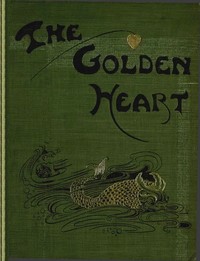
The golden heart, and other fairy stories — Text and Context
(0 User reviews)
1777
Project Gutenberg
2024
Not confirmed
Fantasy literature; Fairy tales; Children's stories
Readers of public-domain and historical texts
Project Gutenberg digital edition
en
Edition facts
Words
43,968
Reading time
192 min
Text sections
5
This digital edition of The golden heart, and other fairy stories — Text and Context is described by source-level measurements including 43,968 words, 3 hr 12 min estimated reading time, and 5 detected text sections.
The text analysis averages about 21.5 words per sentence, while the detected sections provide another way to judge how the source is divided.
Project Gutenberg metadata also associates the work with “Fantasy literature,” connecting these edition facts with the source record’s subject description.
Source:
Project Gutenberg record #73964
Violet Jacob's 1904 collection of nine fairy stories uses recurring images of water, enchanted objects, and journeys across fantastical landscapes. The opening tale, 'The Golden Heart,' establishes a pattern of dialogue between human and magical creatures, while 'Grimaçon' and 'The Cherry Trees' explore movement between domestic and enchanted realms.
Editorial Edition Score
4.7/5
★★★★★
★★★★★
Calculated from edition completeness, EPUB availability, text structure and catalogue metadata. Not a user rating.
How this score is calculated
- Description quality20 pts
- Title & short description10 pts
- Source metadata20 pts
- Text length15 pts
- Chapters / structure15 pts
- EPUB file integrity20 pts
Total of 100 points, scaled to a 2.5-5.0 range. Editions with an empty description or a missing EPUB file are not scored.
Edition quality
Read the Text
lk dress, all covered with silver flowers, and at the three-cornered slit which ran right across the front. “Never mind,” she said, “I’ll sew it up before she sees it. I know where she keeps her needles. Azalea, there was a man with a long staff who scowled at me so. I ran back as hard as I could, but O sister! look what I found! The world is a charming place, I know.”
And she held up a great cream and pink peony.
So the two stood, day after day, looking out over the palace wall, two white and gold figures with their hair done up in little knobs on the tops of their heads, and their fans fluttering like butterflies’ wings. The sun poured down on them, and the blue sky stretched above, and the great, unlimited world, which they knew nothing about, lay all round them.
Now, the Princesses’ father was such a popular man that there was only one person on that side of the world so much talked about, and that was the Sorcerer Badoko. The Emperor thought very seldom of the Sorcerer, because he had little time for thinking of anything but how to be kind to his neighbours; but Badoko could hardly sleep in his bed at night for thinking of the Emperor. He tossed about in his lonely cave, saying under his breath that, come what might, he would make himself the more celebrated of the two. He said it under his breath, so that his two sons, who were lying close by, should not hear him. He did not like his two sons very much.
He could not at all make out why the Princesses’ father was more admired than himself, for even Sorcerers are stupid sometimes—generally because they think themselves so clever. The real reason was because the old man was so kind, but the Sorcerer did not know that. He was clever enough to see that the Emperor was more thought of than himself, but he wasn’t clever enough to know why. At last he made up his mind that it must be because he was richer, and, having come to that conclusion, he determined to steal away the two Princesses. Then he would go to the palace and demand a great ransom—in fact, half the Emperor’s money—and he felt sure that it would be paid.
The Emperor’s garden was full of beautiful trees. In one corner a fountain played, and, near this, a flight of steps ran up to a summer-house on the wall in which the Princesses sat nearly every day and looked down on the world below.
As they were sitting there one afternoon they saw an old man passing by. It was the same person who had scowled at Anemone when she ran away from the litter, and she pointed him out to her sister. He glanced up at the two girls. Under his arm he carried a kind of guitar; Azalea looked at it with interest, for, besides making up stories, she could sing and play very prettily to a little instrument she had, which was rather like this one.
The Sorcerer—for it was he—made an extremely low bow.
“Shall I sing you a song, my ladies?” he asked.
Anemone felt bolder than ever, for was not the wall between them? “Yes, please,” she said.
Then the Sorcerer began to sing; and his voice was like liquid gold. It made one think of all the most beautiful things in the world: of the dawn in the sky, of great birds with white wings, of rushing waters, of prancing horses and waving plumes, of the deep velvet sky with its armies of stars.
“Oh, how lovely! How wonderful!” cried the Princesses. “Oh, sir! where did you learn those songs?”
The Sorcerer smiled. “It is this little guitar,” he said, holding it up. “It is bewitched. One has only to strike the strings and the song comes out of it. Your ladyships think, no doubt, that it is I who sing, but I have only to open my mouth and the guitar does all the rest.”
Now this was a lie, for the Sorcerer’s two sons made all the songs; they were very clever young men.
“Sing one more; please sing one more!” cried the Princesses.
“Very well,” replied he, “one more, but that must be the last. Here is one which I hope you will like. It is called ‘The Peach Trees in the Valley.’”
“What a charming name,” said Anemone, who was fond of flowers.
And the Sorcerer sang:—
In 'The Golden Heart,' the first story of Violet Jacob's 1904 collection, a little boy lying in a fishing smack strikes up a conversation with a fish—an early sign of the direct, unpretentious dialogue between human and magical beings that runs through these nine tales. The boy's wonder at the depth of the sea and the fish's matter-of-fact reply ('That depends on what you are accustomed to') sets a tone where the extraordinary is treated with everyday familiarity.
Jacob's stories frequently shift between enclosed domestic spaces and open, enchanted landscapes. In 'Grimaçon,' the narrative moves from a palace garden to a marsh ruled by an enchanter with a glass tower, while 'The Cherry Trees' and 'Jack Frost' use seasonal change as a backdrop for transformation. These movements are often triggered by water—floods, fountains, or the sea—which acts as both a boundary and a passage.
Water as Threshold and Trap
Water appears repeatedly as a force that both separates and connects. In 'The Golden Heart,' the sea is the setting for the boy's encounter with the fish, and later a flood carries away Princess Moonflower in 'Grimaçon.' The flood is described as a punishment for calling on a stream 'without a good reason,' and it leaves the Queen 'in hysterics' while the dwarf Grimaçon searches for a dropped enchanted leaf. The enchanter's glass tower reflects everything on the marsh, turning water into a surveillance device. In 'The Cherry Trees,' the daffodil princess's fate is tied to a spring thaw. Jacob uses water not as a mere backdrop but as an active agent that propels characters into new, often dangerous situations.
Enchanted Objects and Their Keepers
Several stories hinge on small, potent objects: the enchanted leaf in 'Grimaçon,' the golden heart of the title tale, and the peacock's tail in the story of that name. These items are not simply magical tools; they carry emotional weight. The dwarf Grimaçon picks up the dropped leaf and weeps, remembering his mistress. The leaf becomes a clue and a motivator for a quest. Similarly, the sword inherited from the King's grandfather—with a topaz hilt and Damascus steel—is taken on the journey not for its practical use but for its luck. Jacob often pairs these objects with characters who are small or overlooked: a little boy, a dwarf, a queen in disguise. The objects serve as extensions of their owners' desires or grief.
Movement Between Realms: Palace, Marsh, and Mountain
The stories frequently stage abrupt transitions between settings. In 'Grimaçon,' the action moves from the King of the Crystal Mountains' palace—with its fountains and terraces—to the enchanter's marsh, where crocodiles lurk. The dwarf and the King set out 'to traverse the whole universe,' but the journey is described in terms of specific, vivid locations rather than abstract distance. 'The Dovecote' shifts from a queen's chamber to a room behind fiery roses. 'Jack Frost' begins on a weathercock atop a larch tree. These movements are rarely explained; characters simply find themselves in new places, and the reader must adjust. Jacob's narrative voice treats these leaps as natural, emphasizing the strangeness of the settings through concrete details—the glass tower, the fiery roses, the weathercock—rather than through exposition.
Voice and the Unreliable Narrator
Jacob's narrators often intrude with wry asides or shifts in perspective. In 'The Golden Heart,' the boy wonders if fish-fathers tell their children to sleep, and the fish replies with a dry remark about the temperature. In 'Grimaçon,' the narrator notes that the Queen was 'furiously angry' but 'soon appeased' when given control of the kingdom. The dwarf's grief is described with comic exaggeration: 'He sighed, he wept, he tore his hair, his cries were heard all over the palace.' This blend of sympathy and detachment keeps the tone unpredictable. The narrators also withhold information—the dwarf conceals Moonflower's high birth—creating gaps that the reader must fill. These narrative choices give the stories a conversational, slightly ironic quality that distinguishes them from more solemn fairy-tale traditions.
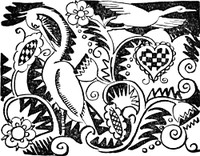
Readers approaching this collection should attend to the way Jacob balances the whimsical and the perilous. The stories reward attention to small details—a dropped leaf, a fish's remark, a sword's hilt—that later prove significant. The movement between scenes is swift and often unexplained, so it helps to read each tale in one sitting. The illustrations by May Sandheim, listed in the contents, offer visual counterparts to the text's recurring motifs of flowers, water, and fantastical creatures.
Years among these shelves, and I still recall how Violet Jacob’s waters carry her wanderers home, the way a familiar threshold does. That same quiet certainty lives in The three bears — A Reader’s Guide, where a small chair and a warm bowl become anchors of belonging. Both whisper that enchantment never truly leaves a room. A gentle kinship, that.
There are no reviews for this eBook.
There are no comments for this eBook.
Reader reflection
What was your reading experience?
Capture what you thought, learned, and would like to remember.
Your progress
0
/
10
2
How much did you enjoy the reading experience?
3
Would you encourage someone else to read it?
4
How much effort did this book require?
5
Did it raise ideas you would like to talk about?
6
How would you describe its reading pace?
7
Did anything about the book feel genuinely new?
8
Is this a title worth rereading?
9
Which lesson or insight stayed with you?
10