1

Swedish fairy tales — Reading Notes
(0 User reviews)
714
Project Gutenberg
2024
Not confirmed
Fairy tales -- Sweden; Folklore -- Sweden
Readers of public-domain and historical texts
Project Gutenberg digital edition
en
Edition facts
Words
45,841
Reading time
200 min
Text sections
84
Before opening Swedish fairy tales — Reading Notes, the edition data offers a quick orientation: 45,841 words, 3 hr 20 min estimated reading time, and 84 detected text sections.
The text analysis averages about 23.4 words per sentence, while the detected sections provide another way to judge how the source is divided.
Project Gutenberg metadata also associates the work with “Fairy tales -- Sweden,” connecting these edition facts with the source record’s subject description.
Source:
Project Gutenberg record #73093
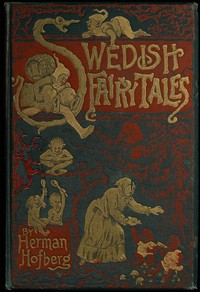
Herman Hofberg's 1888 collection of Swedish fairy tales, translated by W.H. Myers, pairs local legends with historical notes, revealing tensions between generosity and stinginess, human and troll, and the sacred and profane in rural Sweden.
Editorial Edition Score
4.9/5
★★★★★
★★★★★
Calculated from edition completeness, EPUB availability, text structure and catalogue metadata. Not a user rating.
How this score is calculated
- Description quality20 pts
- Title & short description10 pts
- Source metadata20 pts
- Text length15 pts
- Chapters / structure15 pts
- EPUB file integrity20 pts
Total of 100 points, scaled to a 2.5-5.0 range. Editions with an empty description or a missing EPUB file are not scored.
Edition quality
Public-domain source text
Read the source text
The source text is kept in the dedicated reader, separate from this catalogue record and its commentary.
Herman Hofberg's Swedish Fairy Tales (1888) opens with a preface that distinguishes between tradition—tied to specific places and historical facts—and saga, which roams freely in time and space. This framing sets up a collection where each tale is anchored by a historical or ethnographical note, grounding fantastical events in real Swedish locales. The translator, W.H. Myers, states he aimed for a faithful reproduction of Hofberg's ideas, leaving out some notes he deemed unimportant for general readers. The result is a volume that feels both scholarly and folkloric, where trolls borrow meal from parishioners and bishops confront the devil in roadside encounters.
Generosity and Its Opposite
A recurring pattern in these tales is the contrast between open-handedness and miserliness. In one story, trolls borrow food and drink from the parishioners of Resslared, always returning double. But when new, wealthy residents refuse to lend a measure of meal, ale, or milk, the troll woman's polite requests are met with lies—and the housewife's larder is mysteriously emptied. The plenty that once existed vanishes, forcing the family to sell out and move. Another tale features a gentleman so rich he could buy half of Vestergötland, yet so miserly he would not spend money on food. His wealth becomes a burden, and the story explores what happens when hoarding replaces sharing. These episodes suggest that in Hofberg's Sweden, generosity is not just a virtue but a practical necessity for community survival.
Bishops, Trolls, and the Devil
The supernatural in these tales often intersects with the ecclesiastical. Bishop Svedberg of Skara, described as a pious man and mighty preacher, finds the devil intolerable. When his wagon loses a wheel, the bishop calmly instructs the servant to throw the wheel into the rear and continue—only to discover later that the devil himself had been the fourth wheel, holding the axle. The devil later takes revenge by burning down Brunsbo, using a maid's candle snuffing as his tool. The bishop, in turn, sends the devil and all his imps to hell. This blend of folk belief and Christian authority is typical: trolls coexist with parishioners, and bishops wield prayers as weapons against supernatural mischief. The tales do not treat these encounters as allegory but as matter-of-fact events in the landscape of rural Sweden.
Local Legends as Historical Record
Hofberg's method is to collect the most typical traditions rather than everything available, and he accompanies each tale with a note indicating if the story appears in different places. This approach treats folklore as a kind of historical document, one that preserves local memory and moral lessons. The tales are not generic fairy stories but are tied to specific parishes—Resslared, Hassle, Skara—and often include named historical figures like Bishop Svedberg. The translator's decision to omit some notes for the general reader means the English edition leans more toward narrative than annotation, but the original impulse remains: these are stories rooted in place, meant to be read with an awareness of their regional origins. The collection thus functions as a map of Swedish folk belief, where every mountain, creek, and church has its own tale.
Readers approaching Swedish Fairy Tales will find a collection that rewards attention to local detail. The tales are short, often ending with a moral or a twist, and the historical notes (where present) add depth. Pay attention to the recurring motifs of borrowing, repayment, and the consequences of stinginess—they appear across multiple stories and suggest a cultural emphasis on reciprocity. The book is best read not as a single narrative but as a series of snapshots from a world where the supernatural is woven into everyday life.
This collection’s trolls hoarding silver reminded me of my grandmother’s cellar, where she kept jars of cloudberry jam and never offered. I felt that same quiet sting reading Fairy Tales from Spain — Background and Themes—the Moors’ hidden wells, the Christians’ guarded bread. Both books whisper that scarcity makes hearts small, but generosity, even in legend, outlasts the telling.
There are no reviews for this eBook.
There are no comments for this eBook.
Reader reflection
Record your reading impressions
A brief reflection can help important ideas stay with you longer.
Your progress
0
/
10
2
How much did you enjoy the reading experience?
3
Would you recommend this book to another reader?
4
How easy was the book to follow?
5
Did the book deliver what you hoped for?
6
What did you think about the pace?
7
Could you follow the author’s main argument?
8
How useful were the ideas in this book?
9
In one sentence, what did you learn?
10