
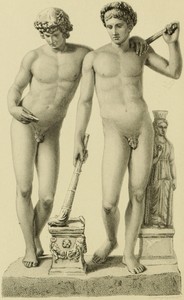
Sketches and Studies in Italy and Greece, Complete by John Addington Symonds
Forget the typical travelogue. John Addington Symonds's Sketches and Studies is something else entirely. Published in the late 1800s, it collects his writings on Italian and Greek art, history, and culture. On the surface, it's a tour: we visit Venetian canals, Florentine piazzas, and the stark beauty of Greek mountains. Symonds describes statues, paintings, and crumbling temples with a scholar's eye. But the real story hums just beneath this scholarly surface.
The Story
There isn't a single plot. Instead, think of it as a series of deep, thoughtful conversations with a incredibly well-read companion. Each essay focuses on a place or a theme—like the spirit of the Renaissance in Florence or the legacy of ancient Greek poetry. Symonds connects the art he sees to the people who made it, trying to understand their passions and ideals. But as you read, you start to notice something. His intense admiration for the male beauty in Greek sculpture and the passionate friendships of Renaissance artists isn't just academic. It's personal. The book becomes a quiet, coded search for identity. He's looking at these past cultures, some of which were more open about love and relationships between men, and measuring them against the strict, repressive rules of his own Victorian England.
Why You Should Read It
You should read this because Symonds's voice is captivating. He writes with such feeling and clarity that a 150-year-old essay about a statue can suddenly feel urgent. You're not just learning about art history; you're witnessing a man use that history to make sense of his own heart. His descriptions of light on marble or the mood of a Sicilian landscape are breathtaking. But the powerful part is the unspoken tension. He can't write openly about his own life, so he pours all that emotion into his descriptions of the past. It makes the book strangely intimate. You come for the tour of Italy and stay for the vulnerable, brilliant guide.
Final Verdict
This book is perfect for thoughtful travelers, history lovers, and anyone who appreciates beautiful, introspective writing. If you like books that work on two levels—a surface journey and a deeper, emotional one—you'll be rewarded here. It's not a fast-paced adventure; it's a slow, rich stroll. It's especially poignant for readers interested in LGBTQ+ history, as it offers a window into a brilliant mind navigating a world without the language we have today. Come for the vivid pictures of the Mediterranean, but be prepared to meet the complex, unforgettable man painting them.









Karen Johnson
2 months agoAs someone who reads a lot, the narrative structure is incredibly compelling. Truly inspiring.