
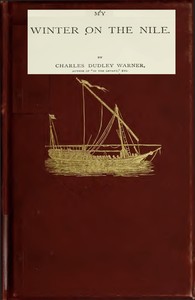
My Winter on the Nile by Charles Dudley Warner
Charles Dudley Warner, a 19th-century American essayist best known for co-writing The Gilded Age with Mark Twain, decided to spend the winter of 1875 traveling by steamer and dahabeeah (a traditional houseboat) from Cairo to the ruins of Abu Simbel and back. 'My Winter on the Nile' is the diary of that trip. It’s not a novel with a plot, but a journey with a rhythm—the slow pulse of the river itself.
The Story
Warner takes us with him. We board the steamer in the chill of a Cairo morning and head south. He describes everything: the other passengers (a mix of earnest scholars, bored socialites, and adventurous souls), the crew, and the ever-changing riverbank. He visits the major sites—the temples of Luxor and Karnak, the Valley of the Kings, the colossal statues at Abu Simbel—but he’s just as interested in the small moments. He writes about bargaining for souvenirs in Aswan, getting stuck on a sandbar, sharing a meal with local villagers, and watching the stars from the deck at night. The 'story' is the experience of travel itself, with all its discomforts, wonders, and sudden moments of clarity.
Why You Should Read It
What makes this old travelogue feel fresh is Warner’s voice. He’s witty, a bit skeptical, and wonderfully observant. He pokes fun at the tourist rituals of his time (which sound eerily familiar) and questions the impact foreigners are having on Egypt. But he’s also genuinely awestruck by the antiquity surrounding him. You get a double vision: the timeless Egypt of the pharaohs, and the 1870s Egypt trying to figure out its place in the modern world. It’s like having a smart, slightly cynical friend whispering commentary in your ear as you look at a photograph from 150 years ago.
Final Verdict
This book is perfect for armchair travelers, history lovers, and anyone who enjoys a sharp, personal essay. If you’ve ever read a modern travel blog and wondered what its great-great-grandfather looked like, this is it. It’s not a fast-paced thriller; it’s a slow, thoughtful float down a legendary river. You’ll come away feeling like you’ve breathed the dust of ancient stones and understood a little more about why we’re all so drawn to places steeped in time. A true classic of travel writing that still has plenty to say.
Anthony Smith
1 year agoHonestly, the content flows smoothly from one chapter to the next. Definitely a 5-star read.









Edward Hill
2 months agoAfter hearing about this author multiple times, the plot twists are genuinely surprising. Definitely a 5-star read.