1

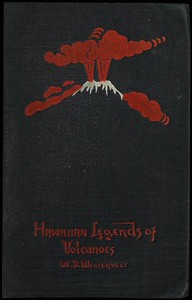
Hawaiian Legends of Volcanoes (mythology) Collected and translated from the Hawaiian — Themes and Context
(0 User reviews)
3036
Project Gutenberg
2021
Not confirmed
Legends -- Hawaii; Volcanoes -- Hawaii
Readers of public-domain and historical texts
Project Gutenberg digital edition
en
Edition facts
Words
51,210
Reading time
223 min
Text sections
25
The source record for Hawaiian Legends of Volcanoes (mythology) Collected and translated from the Hawaiian — Themes and Context measures this digital text at 51,210 words, 3 hr 43 min estimated reading time, and 25 detected text sections.
The text analysis averages about 18.2 words per sentence, while the detected sections provide another way to judge how the source is divided.
Project Gutenberg metadata also associates the work with “Legends -- Hawaii,” connecting these edition facts with the source record’s subject description.
Source:
Project Gutenberg record #66516
W. D. Westervelt's collection of Hawaiian volcano myths, translated from native sources, with a scientific foreword linking geology to legend. The excerpts show Pele's sister Hiiaka journeying, weeping for a friend, and chasing a ghost, revealing a structure that alternates between cosmic framing and intimate, human-scale episodes.
Editorial Edition Score
4.9/5
★★★★★
★★★★★
Calculated from edition completeness, EPUB availability, text structure and catalogue metadata. Not a user rating.
How this score is calculated
- Description quality20 pts
- Title & short description10 pts
- Source metadata20 pts
- Text length15 pts
- Chapters / structure15 pts
- EPUB file integrity20 pts
Total of 100 points, scaled to a 2.5-5.0 range. Editions with an empty description or a missing EPUB file are not scored.
Edition quality
Public-domain source text
Read the source text
The source text is kept in the dedicated reader, separate from this catalogue record and its commentary.
W. D. Westervelt opens Hawaiian Legends of Volcanoes with a scientific foreword that draws an analogy between lunar lava rings and the Hawaiian island chain, describing Mauna Loa and Kilauea as the easternmost vents of a migrating volcanic crack. This geological framing gives way to narratives centered on Pele, the volcano goddess, and her sister Hiiaka, the goddess of ferns. The excerpts reveal a distinctive structural pattern: the legends move between broad, explanatory passages and tightly focused scenes of personal emotion and supernatural intervention.
Geology as Prologue
The foreword situates the Hawaiian Islands within a global volcanic context, describing them as a “curved ridge” built by lava overflows along a migrating crack. Westervelt notes that the last activity moved “from west to east” over thousands of years, leaving two live volcanoes at the eastern end. This scientific introduction does not merely preface the myths; it establishes a vocabulary of molten rock, gas, and circular ramparts that recurs in the legends themselves. The reader encounters Pele’s fire-anger and lava flows not as abstract supernatural forces but as extensions of the same earth processes described in the opening pages.
Hiiaka’s Journey and the Weight of Names
In the excerpt from chapter XV, Hiiaka travels with her companion Wahine-omao. When Wahine-omao asks why Hiiaka weeps, the goddess replies that the smoke from Pele’s anger is falling toward her friend Hopoe. A discussion of names follows: the friend is also called Nana-huki, meaning “eyes like a cord pulling you to her,” but Hiiaka prefers Hopoe, which may mean “one encircled” with wreaths or loving arms. This moment reveals how the narrative layers personal affection over formal naming, and how Hiiaka’s divine perspective allows her to see danger from afar while still expressing human-like grief.
Ghost Chasing and the Boundaries of Life
Later in the same chapter, Hiiaka encounters two girls whose father has drowned. She sees his spirit returning from the beach with a calabash over his shoulder and chases it “from place to place” until it returns to the body. The episode is structured as a pursuit: the ghost wanders aimlessly, afraid of strangers, and Hiiaka drives it back. The narrative dwells on the physical details—the calabash, the reef, the canoe filling with water—while the supernatural action unfolds matter-of-factly. This blend of mundane and magical is characteristic of the collection’s treatment of death and the spirit world.
Recurring Images: Smoke, Ferns, and the Sea
Across the excerpts, certain images recur: smoke from Pele’s anger, the “sweet-scented hala wreaths,” and the sea as both a source of food and a site of drowning. Hiiaka is identified as the goddess of ferns, a detail that ties her to the lush vegetation of the Hawaiian landscape. The movement between scenes is often marked by a shift in vantage point—from the uplands overlooking Hilo Bay to the distant seacoast, from the forest to the reef. These transitions reinforce a geography that is both literal and mythic, where gods and humans share the same terrain and where a glance can span miles.
Readers approaching Hawaiian Legends of Volcanoes will find that the collection rewards attention to its structural rhythms: the alternation between scientific framing and mythic narrative, the way personal names carry multiple meanings, and the recurring movement between high vantage points and intimate encounters. Westervelt’s translations preserve a voice that is direct and unadorned, letting the legends speak through concrete images rather than elaborate commentary.
Reading how Hiiaka weeps for her friend, I remembered sitting by the Delaware once, wondering if the river remembered its own old stories. That other collection, Myths and Legends of Our Own Land — Volume 03 : on and near the Delaware — Text and Context, felt similar—landscape holding grief and ghost together, quietly. Both books make distance feel intimate, like listening to someone else’s ache and finding it familiar.
There are no reviews for this eBook.
There are no comments for this eBook.
Reader reflection
What was your reading experience?
Capture what you thought, learned, and would like to remember.
Your progress
0
/
10
2
How did the book work for you overall?
3
Would you pass this book on to a friend?
4
Did the language feel accessible?
5
Did you gain anything practical from the text?
6
Did any part of the book feel personally relevant?
7
Which aspect of the book did you value most?
8
How distinctive were its ideas or approach?
9
What is the main idea you are taking away?
10