1

Folk-Lore and Legends: Russian and Polish — Edition Insights
(0 User reviews)
729
Project Gutenberg
2015
Not confirmed
Legends -- Russia (Federation); Legends -- Poland
Readers of public-domain and historical texts
Project Gutenberg digital edition
en
Edition facts
Words
46,305
Reading time
202 min
Text sections
26
For Folk-Lore and Legends: Russian and Polish — Edition Insights, the stored edition analysis reports 46,305 words, 3 hr 22 min estimated reading time, and 26 detected text sections.
The text analysis averages about 19.2 words per sentence, while the detected sections provide another way to judge how the source is divided.
Project Gutenberg metadata also associates the work with “Legends -- Russia (Federation),” connecting these edition facts with the source record’s subject description.
Source:
Project Gutenberg record #49249
This 1890 collection by Charles John Tibbitts presents 26 Russian and Polish folk tales drawn from chap-books and collectors like Afanasief and Glinski. The excerpts reveal recurring motifs of foolish peasants, magical winds, and plague personified, with tales often blending domestic strife and supernatural justice.
Editorial Edition Score
4.8/5
★★★★★
★★★★★
Calculated from edition completeness, EPUB availability, text structure and catalogue metadata. Not a user rating.
How this score is calculated
- Description quality20 pts
- Title & short description10 pts
- Source metadata20 pts
- Text length15 pts
- Chapters / structure15 pts
- EPUB file integrity20 pts
Total of 100 points, scaled to a 2.5-5.0 range. Editions with an empty description or a missing EPUB file are not scored.
Edition quality
Public-domain source text
Read the source text
The source text is kept in the dedicated reader, separate from this catalogue record and its commentary.
This 1890 volume, edited by Charles John Tibbitts, gathers twenty-six tales from Russian chap-books and the work of collectors such as Afanasief, Erben, Wojcicki, and Glinski. Tibbitts notes in his introductory remarks that many tales are of foreign origin but have been adapted to incorporate national customs and lore. The excerpts show a mix of domestic realism and supernatural intervention: a poor man loses a horse’s tail, a peasant confronts the South-wind, and a man wrestles the Plague itself.
The catalog subjects—Legends of Russia and Poland—are broadly accurate, but the tales often feel more like moral fables or comic anecdotes than heroic legends. The collection’s strength lies in its everyday settings and blunt, sometimes brutal, resolutions.
Domestic Strife as a Narrative Engine
Several tales begin with a quarrel between a poor man and his wife or brother. In “The Poor Man and the Judge,” a rich brother refuses to lend a collar, leading the poor man to tie his sledge to the horse’s tail—a decision that ends with the tail torn out. In “The Peasant and the Wind,” a wife beats her husband for losing flour to the wind and sends him to demand compensation. These openings establish conflict through material scarcity and stubbornness, not supernatural causes. The wife is described as “as wily as a serpent” and “bad tempered,” while the husband is “as dull as a sheep.” The tales use blunt character contrasts to drive the plot forward, often with comic or ironic outcomes.
Personified Forces and Moral Ambiguity
The wind and the plague are treated as sentient beings. In “The Peasant and the Wind,” the South-wind is one of four sons of an old woman who lives in a forest hut. The peasant must climb onto a stove to avoid being frozen by the North-wind. In “The Plague,” the disease is a female figure that the protagonist grapples with physically: “he laid hold of the Plague so that she should not escape him.” He drowns himself to destroy her, but she escapes “as light as a feather.” These personifications blur the line between natural disaster and supernatural entity, and the endings are not always just: the plague survives, and the man dies. The tales do not guarantee that virtue is rewarded.
Structure and Source: Chap-Book Origins
Tibbitts explicitly states that the tales come from Russian chap-book literature and from collectors. The excerpts show a simple, repetitive structure: a problem arises, a journey is undertaken, a helper appears (often an old woman or magical object), and a resolution follows—sometimes happy, sometimes not. The language is plain, with little description beyond action and dialogue. For example, in “The Peasant and the Wind,” the old woman says, “I am the mother of the winds, and I have four sons.” This directness suits oral storytelling. The collection’s value lies in preserving these vernacular narratives, even if the editing is minimal. Readers interested in folk motifs will find familiar patterns: the foolish hero, the talking animal, the test of character.
Readers should approach this collection as a sampler of nineteenth-century folk-tale transcription rather than a polished literary work. The tales are short, often abrupt, and occasionally contradictory in moral tone. Pay attention to the domestic details—how people borrow horses, grind corn, or argue over flour—as these ground the fantastic elements in everyday life. The volume rewards those who enjoy comparing variants of familiar story types across cultures.
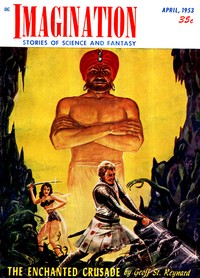
Sometimes a story stays with you not because of its plot, but because of how it hums underneath your day—those old Russian and Polish tales, with their winds and stubborn folk, left that quiet hum in me. I found something similar lingering in The Enchanted Crusade — A Reader’s Guide, a soft echo of that same patient strangeness, as if the pages were remembering something I’d already half-forgotten.
There are no reviews for this eBook.
There are no comments for this eBook.
Reader reflection
What was your reading experience?
Capture what you thought, learned, and would like to remember.
Your progress
0
/
10
2
Was reading this book enjoyable?
3
How likely are you to recommend this book?
4
How much effort did this book require?
5
How personally connected did you feel to the book?
6
How did the reading compare with what you expected?
7
Did you gain anything practical from the text?
8
Which aspect of the book did you value most?
9
Which lesson or insight stayed with you?
10